
This website is no longer active and only exists for reference. Visit bbyo.org to view our current website.


AZA & BBG
As we reach the midpoint of our term as International Gizborim, we find ourselves reflecting not only on the numbers we have posted but on the cultural and structural shifts we have led together within the Movement. The work of this position is often reduced to numbers and irrelevance, yet our true responsibility is to build and refine the financial engine that powers BBYO’s programs, experiences, and impact worldwide. Over the past months, we have focused on making that engine more accessible, more global, and more responsive to the needs of teens everywhere. This midterm reflection is both a celebration of what we have accomplished together and a clear framing of the priorities that will guide us through the second half of our term.
One of the clearest examples of our progress is #givingBBYOday. International participation has always been one of the biggest challenges in movement-wide fundraising, especially across time zones, currencies, and varying levels of local infrastructure. This year, we intentionally leaned into a new structure by introducing and empowering the position of global admin, and that decision fundamentally changed the way the day operated. With a central point for coordination and logistics, we were able to simplify processes, answer questions faster, and support communities that historically struggled to plug into international campaigns. As a result, #givingBBYOday raised over $100,000 across 20 countries, with both the total raised and the number of participating countries standing as record-breaking milestones for our Movement. That success did more than just boost our numbers; it proved what is possible when we take international inclusion seriously and design our systems to support Alephs and BBGs everywhere.
We have also watched Aleph engagement around fundraising reach a new level. Our goal this term has never been just to collect donations; it has been to build a culture where every teen sees themselves as capable of contributing to the sustainability and growth of our Movement. To date, more than $1.2 million has been raised with the help of 8,300 donors and 1,400 individual fundraisers. Those 1,400 teens did not just share a link once. These teens stepped into leadership, advocated for BBYO, and made the case to their communities that our experiences, traditions, and opportunities are worth investing in. The scale of that participation shows that fundraising is no longer seen as a niche job held by a few; it is becoming a shared responsibility, woven into our understanding of what it means to be a leader in this Movement. We are proud not only of the amount raised, but of the thousands of small conversations, messages, and moments of courage that made those numbers possible.
At the same time, we knew that raising money was only one part of the equation. If teens do not understand what the International Service Fund is, why it exists, or how it supports them and their peers, then the impact of any fundraising effort is limited. That is why we helped create and support the ISF Education Committee as a new ILN opportunity for teens who wanted to lead on education and awareness. Today, that committee includes 15 engaged members who are each contributing their talents to three key projects. One team is focused on website design, working on the look, feel, and structure of the ISF’s digital presence so that when the new website drops, it clearly and compellingly tells the story of where our money goes. Another team is writing Shofar articles that break down the role and impact of the ISF in an accessible way, helping more teens understand how the fund connects directly to their experiences and opportunities. The third team is dedicated to video promotion, creating an ISF education video that will be shared on social media to make learning about the fund easier, more engaging, and more relevant to the way teens consume content today.
Of course, our responsibility does not end when the money is raised and the education materials are produced. We also hold ourselves accountable for distributing funds in a way that is timely, fair, and responsive to the ideas and needs coming from every region and council. This is where the Gamechanger Granting Committee has been essential. With 15 Granting Coaches supporting the process, the committee is operating at an average response speed of just 8 days. That kind of turnaround time matters; it allows chapters and regions to dream big without worrying that their ideas will be stalled in a long approval process. So far, the committee has received 343 grant applications from 54 regions and councils and has approved 210 grants. Each approval represents a program, initiative, or experience that was able to move from idea to reality because our systems were prepared to respond quickly and thoughtfully. We see this as a direct reflection of our commitment to making the International Service Fund accessible and impactful at every level of the Movement.
Looking ahead to the second half of our term, we are focused on ensuring that the systems and successes of this year do not end with us. Our first major priority is ISF Contributions and structure. We are working toward legislation, set to come at February Execs, that will formally structure the ISF and bring greater clarity and transparency to how funds are allocated. Our goal is to create real percentage allocations and sub-funds for every year’s ISF revenue so that future boards know what portion of funds is dedicated to specific purposes. This kind of structure will help ensure that the ISF remains consistent, strategic, and aligned with the Movement’s values year after year, not just when momentum is high or specific leaders are particularly passionate.
Our second major priority is chapter fundraising. The successes we have seen internationally must translate into sustainable, empowering practices at the chapter level. We are especially excited about building momentum with alumni through efforts like the Deli Project, which has the potential to reconnect past members with current teens and remind them that they still have a role to play in shaping BBYO’s future. Supporting chapters in elevating their fundraising means helping them build relationships, tell their stories, and sustain their own programming with confidence. When chapters have both the skills and the support to fundraise effectively, it strengthens the Movement from the ground up.
Finally, our third priority is developing on-demand educational resources so that knowledge about fundraising and funding does not live only in the hands of a few. We are working on creating how-to videos that will remain available long after this term ends, offering anyone the chance to learn key skills at their own pace. These videos will cover how to fundraise, how to submit for IC Shuk, and how to apply for a Gamechanger Grant. Our hope is that by putting these tools directly into the hands of teens, we make it easier for leaders at every level—chapter, council, regional, and international—to step into financial leadership roles with confidence and clarity.
As we reflect on the first half of this term, we feel immense pride in what has been accomplished, but also a deep sense of responsibility to keep pushing. The numbers are exciting, but they tell only part of the story. The rest is written in the growth of teen leadership, the strengthening of our systems, and the expanding belief that every one of us can contribute to the future of this Movement. We are honored to serve together in this role and are committed to finishing this term with the same energy, focus, and collaboration that have carried us to this point.
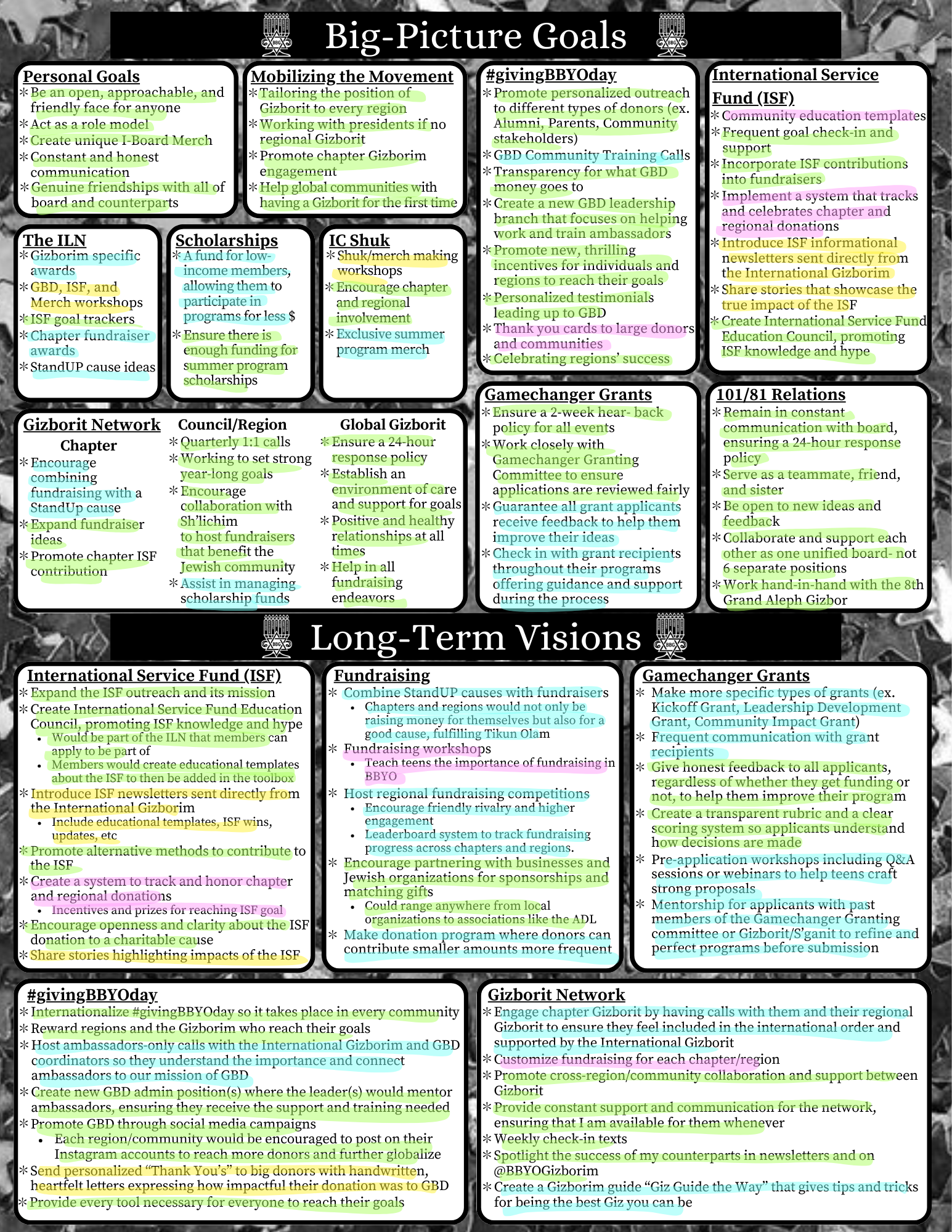
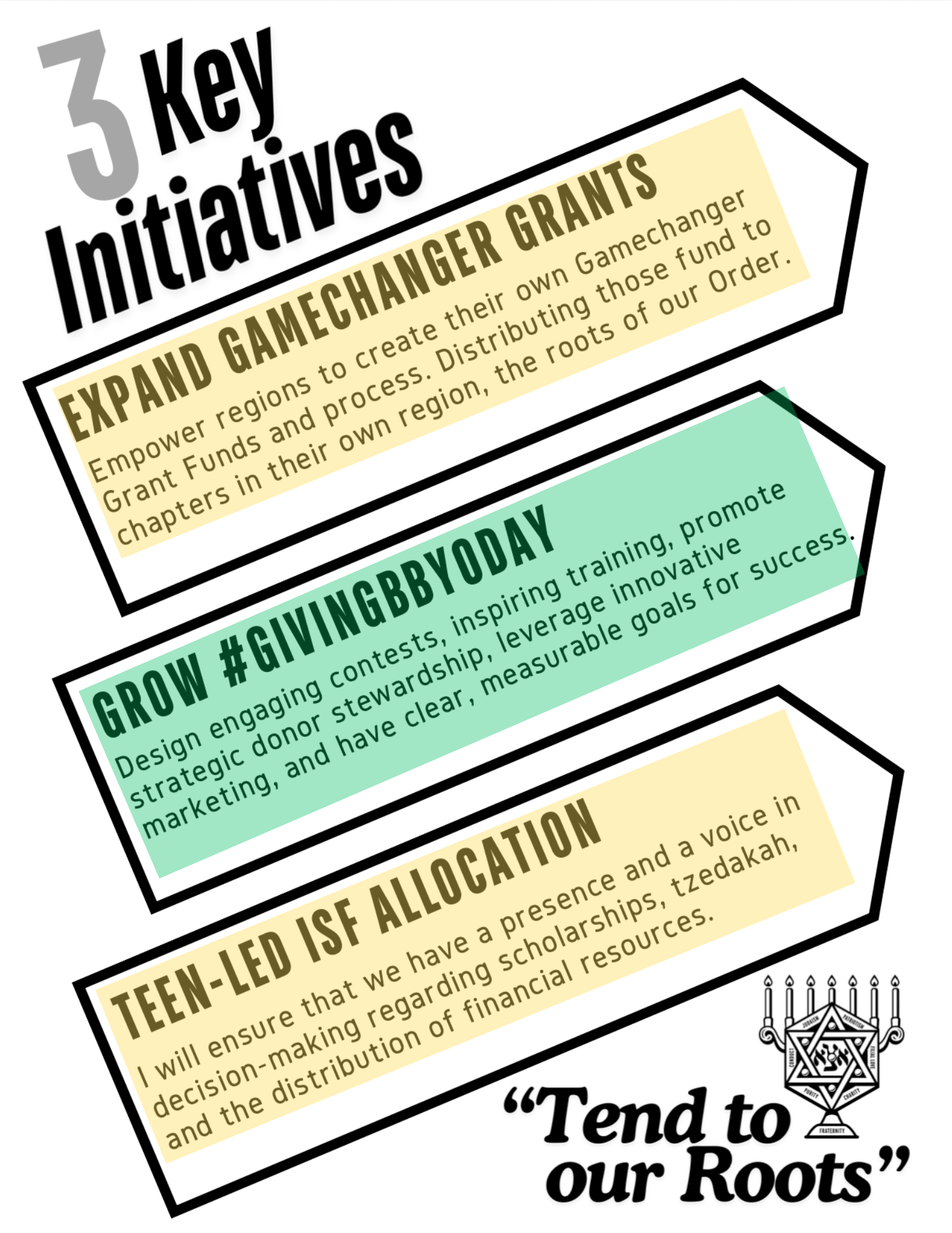
From the current Grand Aleph Gizbor and International Gizborit.
All views expressed on content written for The Shofar represent the opinions and thoughts of the individual authors. The author biography represents the author at the time in which they were in BBYO.


